Sciatica Treatment in Marbella: Physiotherapy, Osteopathy and Recovery
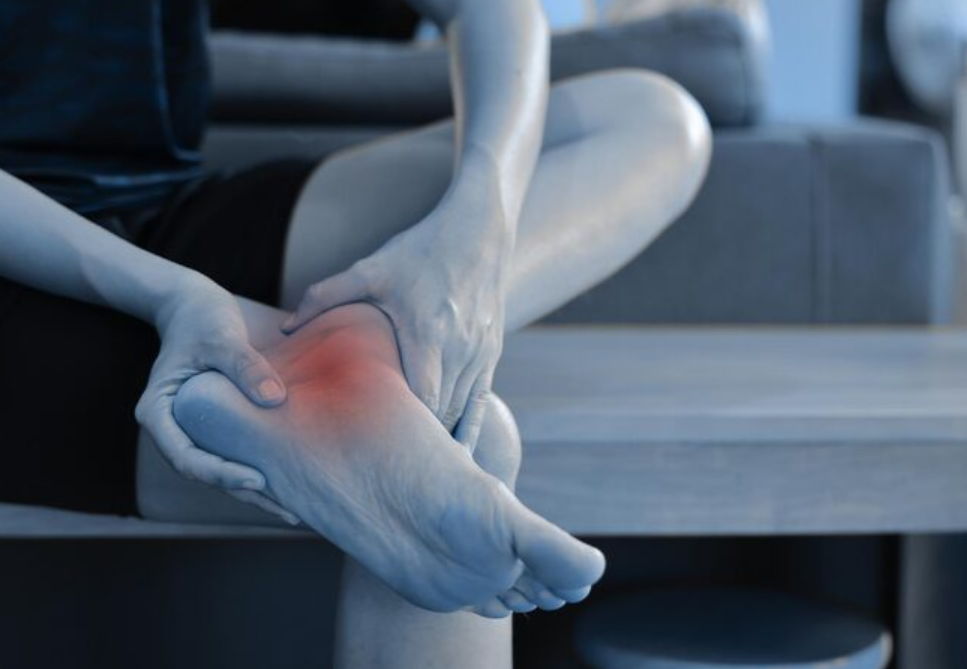
Sciatica can cause pain, tingling, numbness or discomfort that travels from the lower back through the buttock and into the leg. For some people, it can make sitting, walking, sleeping or exercising extremely difficult.
If you are looking for sciatica treatment in Marbella, the first step is understanding what may be causing your symptoms.
At J. Rodríguez Osteosalud, we provide personalised physiotherapy and osteopathy for people experiencing sciatica, lower back pain and nerve-related symptoms in Marbella and the surrounding area.
We also work with international residents, expats, golfers, athletes and visitors looking for an English-speaking physiotherapist or osteopath in Marbella.
What is sciatica?
Sciatica refers to symptoms associated with irritation or compression of the sciatic nerve or the nerve roots that contribute to it.
The sciatic nerve is the largest nerve in the human body. It runs from the lower back through the buttocks and down the leg.
Sciatica does not always feel the same.
Some people experience:
- Sharp or shooting pain
- Burning pain
- Tingling or pins and needles
- Numbness
- Pain travelling from the lower back into the buttock or leg
- Symptoms that become worse when sitting
- Difficulty walking or standing comfortably
- Weakness in the affected leg or foot
The location and intensity of symptoms can vary significantly from one person to another.
What causes sciatica?
Sciatica can have several different causes.
Common causes include:
Herniated or bulging discs
A disc problem in the lumbar spine can irritate or compress a nerve root and cause symptoms that travel into the leg.
Spinal stenosis
A narrowing of the spaces around the spinal nerves can sometimes contribute to nerve-related symptoms, particularly in older adults.
Muscular and movement-related problems
Changes in muscle tension, mobility and movement patterns may contribute to symptoms in some people.
Previous injuries
An old back, hip or pelvic injury can sometimes influence movement and contribute to recurrent symptoms.
Prolonged sitting
Spending many hours sitting at a desk, driving or travelling may aggravate existing lower back and leg symptoms.
Physical overload
Sudden increases in training, lifting, running, golf or other physical activities can sometimes trigger or worsen back-related symptoms.
Because there are different possible causes, sciatica should not be treated in exactly the same way in every patient.
How can physiotherapy help sciatica?
Physiotherapy can play an important role in the conservative management and rehabilitation of many people with sciatica.
The treatment depends on your symptoms, physical examination and functional limitations.
Depending on your individual needs, physiotherapy may include:
Individual assessment
A physiotherapist can assess your symptoms, movement, mobility, strength and functional limitations.
The purpose is to understand how your symptoms are affecting you and identify factors that may be contributing to the problem.
Manual therapy
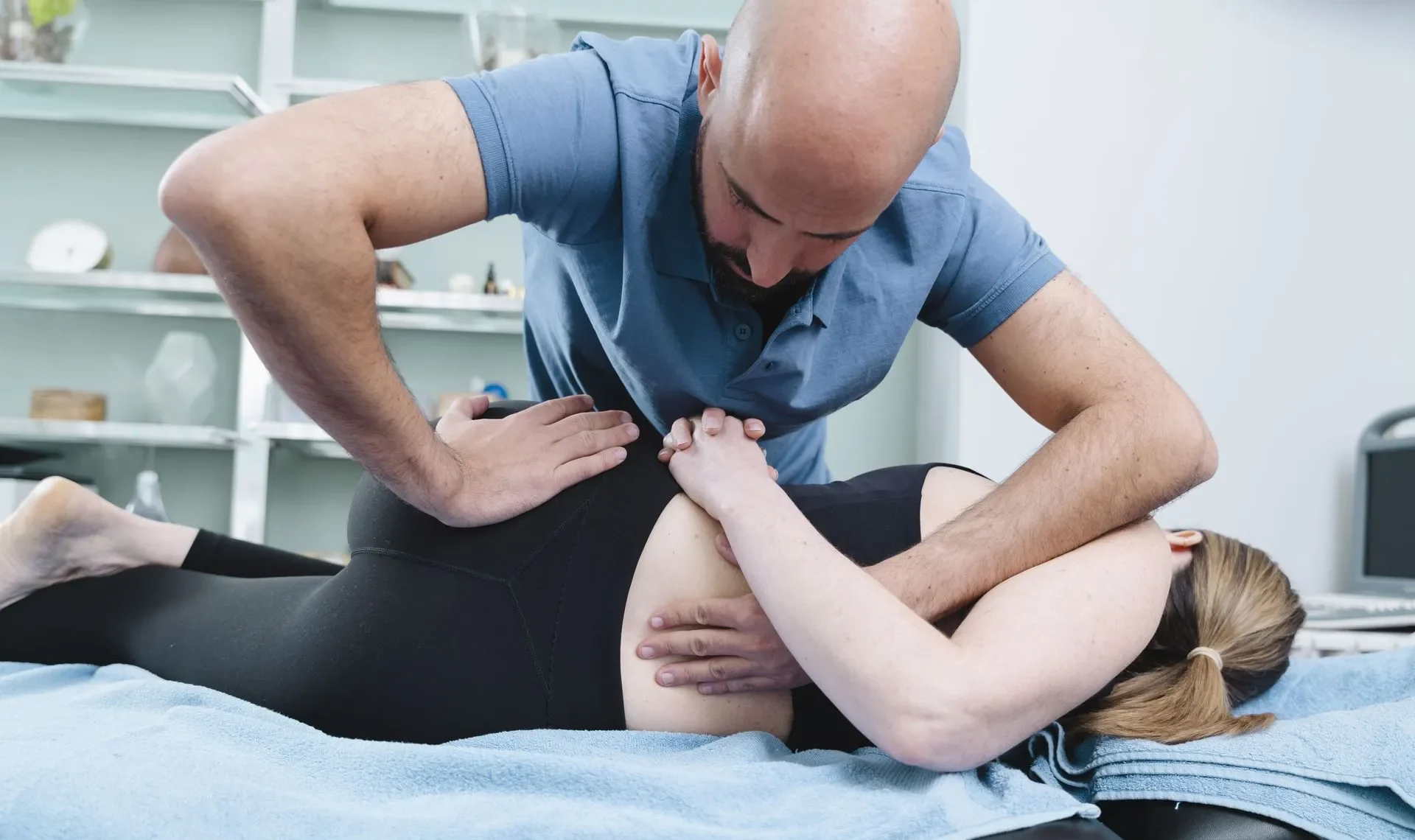
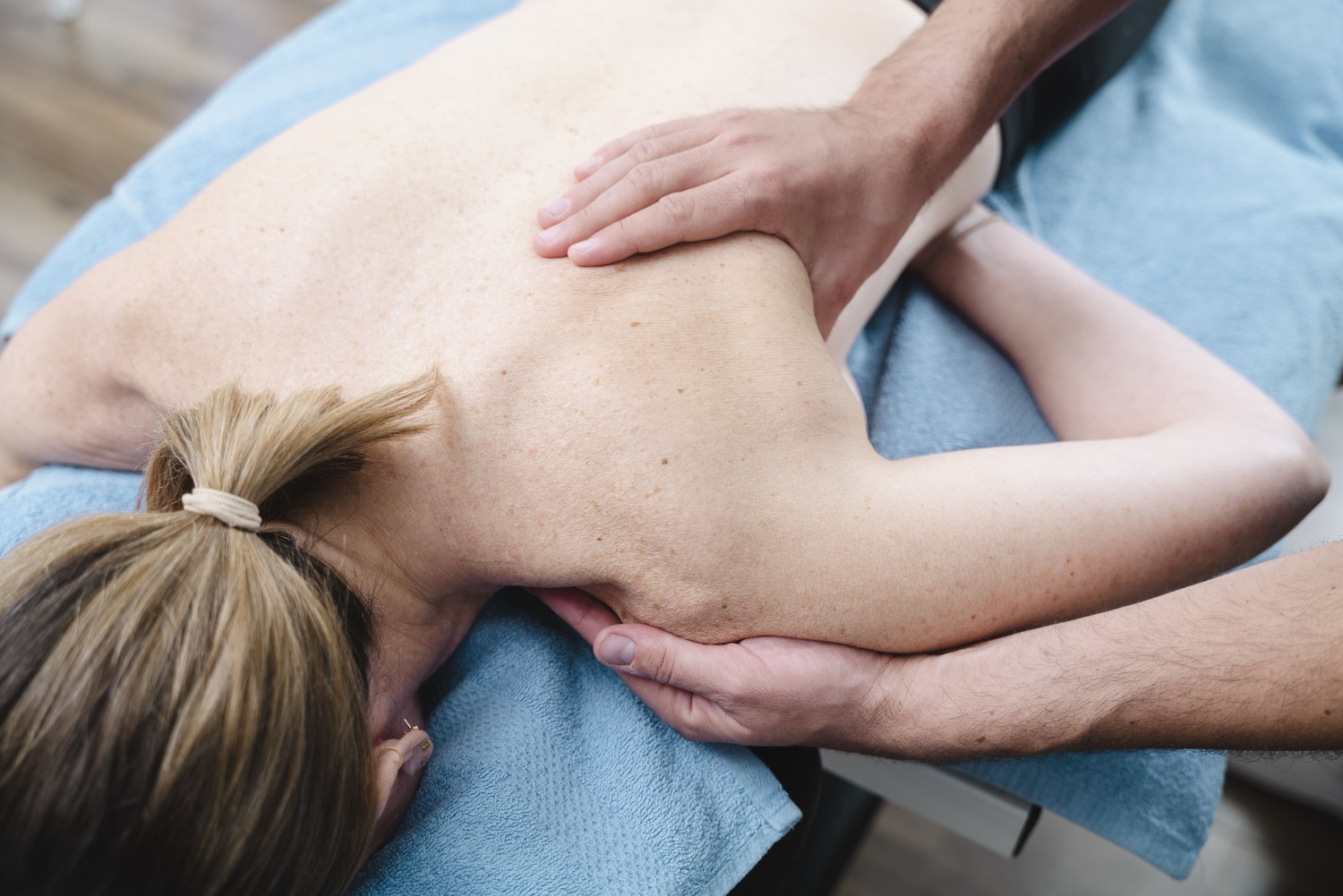
Hands-on techniques may be used to address restricted mobility or muscular tension when clinically appropriate.
Therapeutic exercise
A personalised exercise programme can help improve mobility, strength, physical capacity and confidence with movement.
Exercises may be progressively adapted as symptoms improve.
Movement and motor control
Improving the way you move and control your lumbar spine, pelvis and lower limbs can be an important part of rehabilitation.
Education
Understanding your symptoms and learning how to manage activities, movement and exercise can help you take a more active role in your recovery.
Can osteopathy help sciatica?
Osteopathy may be incorporated into a personalised treatment programme for some people with sciatica.
At J. Rodríguez Osteosalud, osteopathic treatment focuses on assessing movement and the musculoskeletal system as a whole rather than simply treating the area where the pain is felt.
Depending on the individual assessment, treatment may include manual techniques aimed at improving mobility and reducing muscular tension.
However, the most appropriate treatment depends on the cause and characteristics of your symptoms.
There is no single treatment that is suitable for every person with sciatica.
Physiotherapy or osteopathy for sciatica: which is better?
This is a common question.
The answer depends on the individual patient.
Physiotherapy can be particularly useful when rehabilitation, exercise, strength, mobility and functional recovery are important components of treatment.
Osteopathy may be incorporated when manual treatment and a broader musculoskeletal assessment are appropriate.
In some cases, combining different approaches can be useful.
At J. Rodríguez Osteosalud, treatment is personalised according to the patient’s symptoms, goals and physical assessment rather than following a fixed protocol.
Sciatica after travelling to Marbella
Long flights, long car journeys and prolonged sitting can aggravate existing lower back problems.
This can be particularly frustrating if your symptoms appear when you arrive in Marbella for a holiday.
You may notice:
- Lower back stiffness
- Pain when getting out of a car or plane
- Buttock pain
- Pain travelling down one leg
- Tingling or numbness
- Difficulty walking after sitting for a long time
If your symptoms started after a long journey, a physiotherapy assessment can help determine what may be contributing to your discomfort.
If you are interested in this topic, see our guide to back pain after travelling to Marbella.
Sciatica and golf
Golf is one of the most popular sports among international residents and visitors in Marbella.
The repeated rotation, changes of direction and physical demands of the golf swing can place considerable demands on the lower back.
If you experience sciatic symptoms when playing golf, it is important not simply to ignore the pain and continue increasing your activity.
A physiotherapy assessment can help identify mobility limitations, strength deficits and movement factors that may be contributing to your symptoms.
J. Rodríguez Osteosalud also provides osteopathy for golfers in Marbella, with treatment adapted to the physical demands of the sport.
When should you see a physiotherapist for sciatica?
You should consider professional assessment if your symptoms:
- Persist or repeatedly return
- Affect your ability to walk or exercise
- Make sitting or sleeping difficult
- Interfere with your normal activities
- Travel from your lower back into your leg
- Include persistent tingling or numbness
- Started following an injury
- Are getting progressively worse
A professional assessment is particularly important when symptoms are severe, unusual or persistent.
When is sciatica an emergency?
Most cases of back and leg pain are not emergencies, but certain symptoms require urgent medical assessment.
Seek urgent medical attention if you develop symptoms such as:
- New loss of bladder or bowel control
- Numbness around the groin, genitals or inner thighs
- Significant or rapidly progressing weakness in the legs
- Severe symptoms following significant trauma
- Severe back pain accompanied by other concerning systemic symptoms
These symptoms should not be managed solely through physiotherapy or osteopathy.
How long does sciatica take to improve?
Recovery time varies considerably.
Some people improve relatively quickly, while others experience symptoms for several weeks or longer.
The duration can depend on:
- The underlying cause
- Severity of symptoms
- Duration of the problem
- Physical condition
- Activity levels
- Previous episodes
- Response to treatment
- Ability to gradually return to normal movement and exercise
Rather than focusing only on how quickly the pain disappears, rehabilitation should aim to progressively restore movement and function.
Can you receive sciatica treatment at home in Marbella?
Yes.
If travelling to a clinic is uncomfortable or inconvenient, home physiotherapy in Marbella can be an alternative.
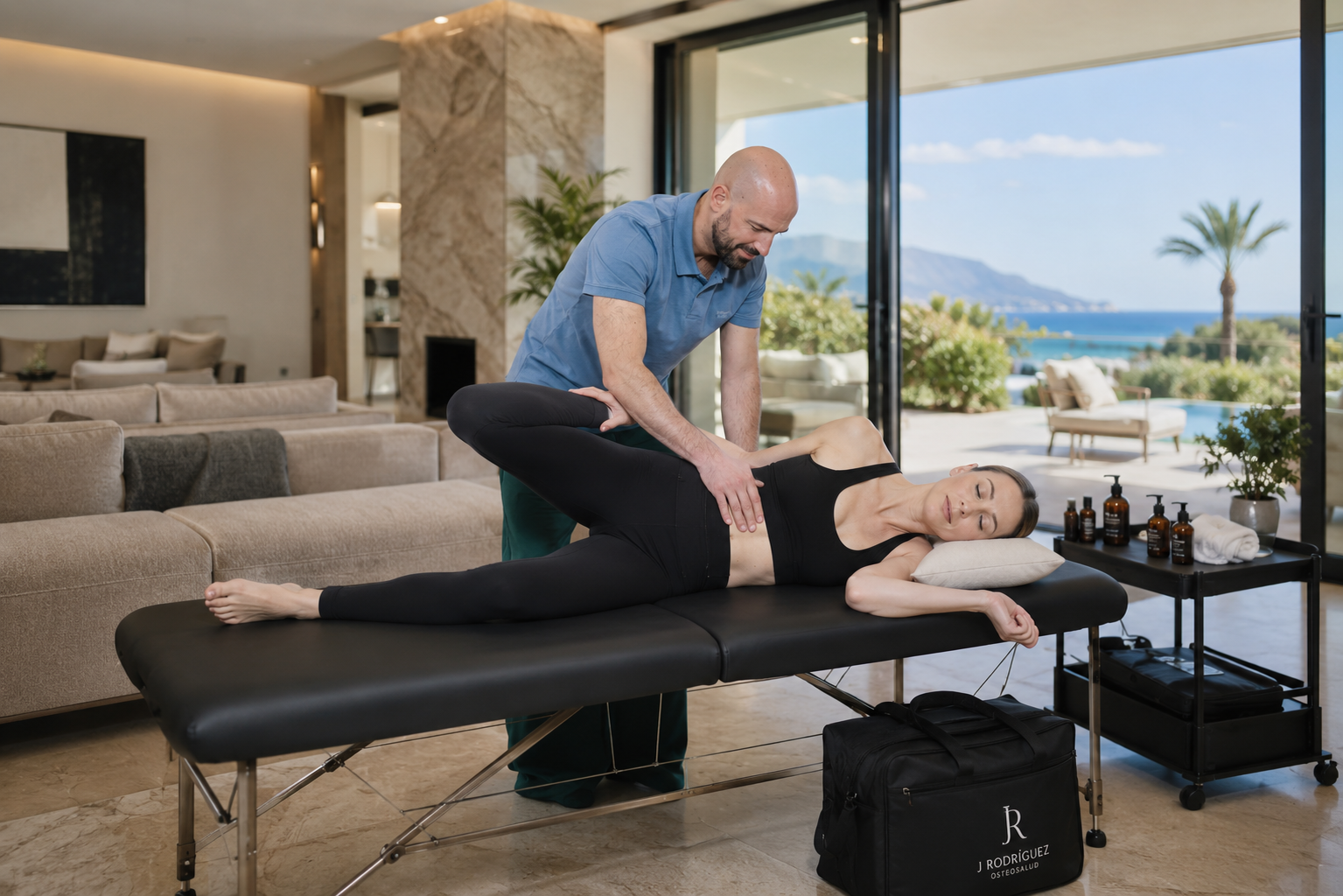
J. Rodríguez Osteosalud provides home physiotherapy in Marbella, Puerto Banús and surrounding areas for residents, expats, international clients, athletes and visitors.
Home treatment may be particularly convenient if you are experiencing significant difficulty walking, are recovering from an injury or surgery, or simply prefer the privacy of treatment at home.
English-speaking physiotherapist for sciatica in Marbella
If you are an international resident or visitor, finding healthcare in English can make the treatment process much easier.
At J. Rodríguez Osteosalud, José Rodríguez provides physiotherapy and osteopathy in Marbella for international patients, including expats, athletes, golfers and visitors.
With more than 12 years of experience and a Master’s degree in manipulative physiotherapy and osteopathy, his approach combines personalised assessment, manual therapy, therapeutic exercise and rehabilitation according to each patient’s needs.
Sciatica treatment in Marbella
If you are experiencing sciatic pain and are looking for physiotherapy or osteopathy for sciatica in Marbella, J. Rodríguez Osteosalud can assess your symptoms and help determine the most appropriate treatment approach.
Whether you live in Marbella, are an international resident, spend part of the year on the Costa del Sol or are visiting Spain, you can contact the clinic to arrange an individual assessment.
Book an appointment with J. Rodríguez Osteosalud in Marbella and take the first step towards improving your mobility and managing your symptoms.